Wired vs Wireless CCTV: Which Surveillance System Is Right for Your Business?
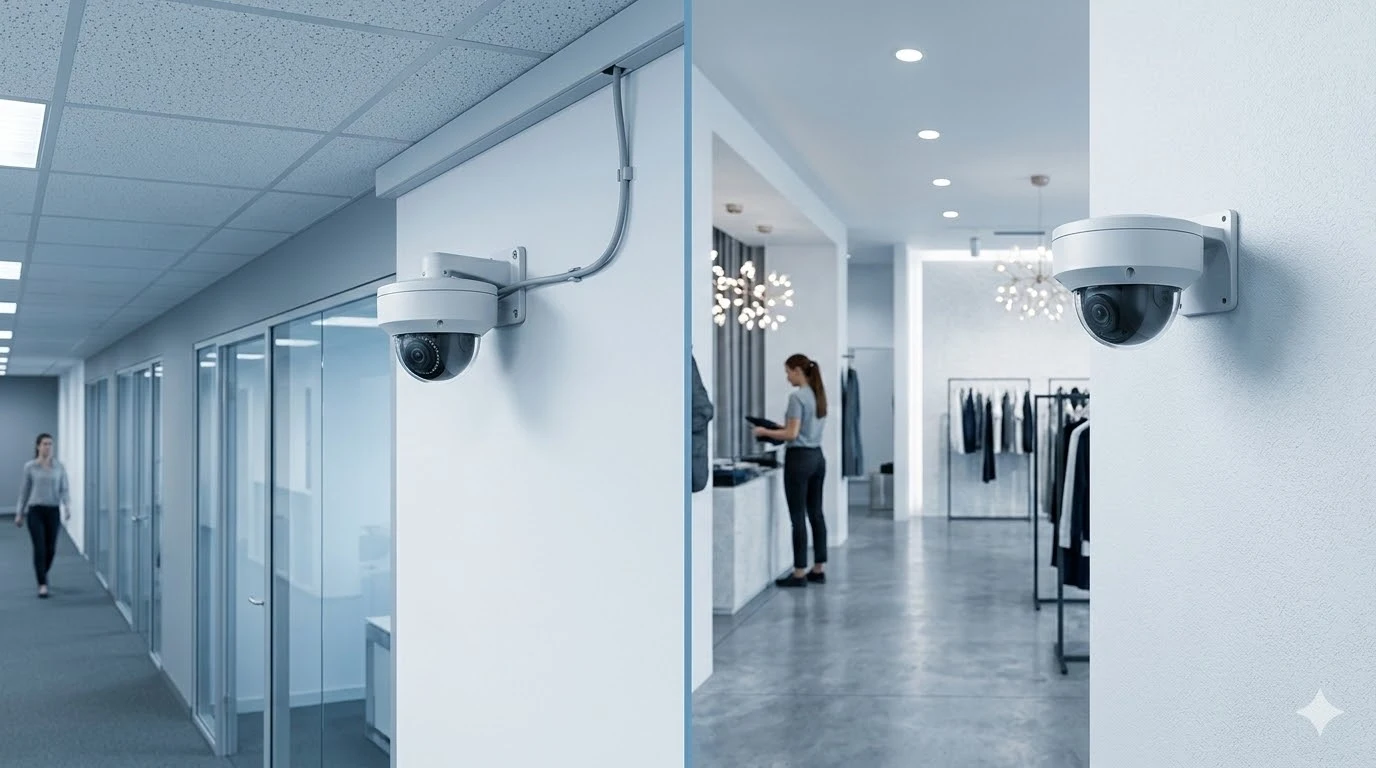
Wired vs wireless CCTV is one of the most common questions we get from business owners planning a new surveillance system, and it’s the right question to ask. The wrong choice for your facility can mean higher installation costs, reliability problems, or a system that doesn’t scale when you need it to.
The answer isn’t the same for every business. It depends on your building, your budget, your existing infrastructure, and how your security needs are likely to evolve. This guide gives you a clear, honest breakdown of both options so you can make the right call.
According to Genetec’s 2024 State of Physical Security Report, over 5,500 physical security professionals worldwide were surveyed with cloud adoption, reliability, and system integration cited as the top priorities driving infrastructure upgrades.
What's the Actual Difference?
At the core, wired and wireless CCTV systems differ in how cameras connect to the recording device and how power is delivered.
Wired systems use physical cables, typically Ethernet (Cat5e/Cat6) for IP cameras or coaxial cable for analog, to transmit video data and, in the case of PoE (Power over Ethernet), deliver power to each camera through a single cable run. Video data travels over a dedicated, closed circuit path directly to a DVR or NVR.
Wireless systems transmit video data over WiFi or a dedicated wireless network to a Network Video Recorder (NVR). Cameras still require power either via a power adapter to an electrical outlet or, in some cases, battery power, but the video signal travels wirelessly rather than through cable.
That distinction has cascading implications for reliability, image quality, installation complexity, cost, and long term maintenance. Here’s how each stacks up across the factors that matter most for commercial deployments.
Wired CCTV Surveillance Systems
The Case For Wired
Reliability is the defining advantage. A wired connection is a closed circuit, it doesn’t share bandwidth with other devices, isn’t affected by WiFi congestion, and doesn’t degrade when someone microwaves lunch or a neighboring business adds access points. For businesses where surveillance continuity is non negotiable; financial institutions, healthcare facilities, high value retail, manufacturing, wired systems deliver the consistency that wireless simply can’t match.
Video quality is consistently higher. Wired IP cameras transmit full, uncompressed video streams without the bandwidth compromises that wireless transmission can introduce. For environments where identifying faces, reading license plates, or capturing fine detail matters; entry points, cash handling areas, parking lots, wired cameras reliably deliver cleaner footage.
No interference, no dead zones. Physical walls, floors, neighboring wireless networks, and RF interference from industrial equipment are non-issues for a wired system. In manufacturing environments, warehouses with metal racking, or multi story buildings with thick concrete construction, wireless signals struggle. Wired systems don’t.
Cybersecurity is tighter by default. Wired camera traffic on a dedicated network segment is significantly harder to intercept or disrupt than wireless signals. For businesses handling sensitive data or operating in regulated industries, this matters.
The Trade-offs
Installation is more involved. Running cable through walls, ceilings, and conduit takes more time and planning than a wireless deployment. In existing buildings, particularly those with finished interiors, cable routing can be complex and disruptive. This is where structured cabling expertise makes a genuine difference: a well planned wired installation is clean, documented, and built to last. A poorly planned one creates problems for years.
Camera placement is fixed at installation. Moving a wired camera means rerouting cable, which may involve opening walls or ceilings. For businesses with stable layouts, this is rarely a problem. For businesses that reconfigure their spaces regularly, it’s worth factoring in.
Higher upfront installation cost. Labor and materials for cable runs add to the initial project cost, especially in large facilities or complex buildings. That said, total cost of ownership over 5–10 years often favors wired systems due to lower maintenance costs and longer equipment life.
Wireless CCTV Surveillance Systems
The Case For Wireless
Faster, less disruptive installation. Without the need to run cable through walls and ceilings, wireless systems go in faster and with less disruption to the business. For retrofitting cameras into existing buildings, particularly those with historic architecture, difficult-to-route spaces, or tenants in place, wireless is often the practical choice.
Greater flexibility in camera placement. Wireless cameras can be positioned almost anywhere within WiFi range without concern for cable routing. For businesses that need to monitor temporary areas, outdoor spaces without existing infrastructure, or locations that change periodically, wireless provides the flexibility that wired systems can’t easily offer.
Lower barrier to entry for some deployments. For small businesses or single location deployments with straightforward coverage needs, wireless systems can reduce initial installation costs by eliminating cable runs. The trade off is ongoing attention to network performance and, in some cases, battery maintenance.
Scalability in some contexts. Adding cameras to a wireless system doesn’t require new cable runs, just a camera, a power source, and sufficient network coverage. For businesses expanding into new areas of an existing facility with good WiFi infrastructure already in place, this can simplify growth.
The Trade-offs
Signal interference is a real operational risk. Wireless CCTV systems compete for bandwidth with every other device on your network; smartphones, laptops, IoT devices, and neighboring businesses’ WiFi networks. In dense commercial environments, signal congestion can cause video dropouts, reduced frame rates, and degraded image quality. This isn’t a theoretical concern; it’s a documented operational issue in real deployments.
Network dependency creates a single point of failure. If your wireless network goes down, router failure, ISP outage, power interruption to a critical access point, your wireless cameras go with it. Wired cameras on a PoE switch with a UPS (uninterruptible power supply) keep recording through network outages.
Cybersecurity requires active attention. Wireless video transmission is inherently more exposed than wired. Strong encryption, network segmentation, regular firmware updates, and strong password policies are non-negotiable for any wireless surveillance deployment. A wireless camera system that isn’t properly secured is an attack surface.
Battery powered cameras require ongoing maintenance. While batteries offer flexibility in placement, they need regular monitoring and replacement. A camera with a dead battery provides zero coverage, and in a commercial environment, that gap may not be noticed until an incident has already occurred.
Which Should Your Business Choose?
Choose wired if:
- You’re building out a new facility or doing significant renovations where cable routing is straightforward
- Surveillance reliability and video quality are non negotiable
- Your environment has high RF interference potential (manufacturing, warehouses, industrial sites)
- You’re deploying a large system across multiple floors or a large footprint
- Cybersecurity and data integrity are high priorities
Choose wireless if:
- You’re retrofitting cameras into an existing building where cable routing is impractical
- Your coverage needs are straightforward and your Wi-Fi infrastructure is robust
- You need temporary or flexible camera placement that may change over time
- Budget constraints make upfront installation costs a primary concern
Consider a hybrid approach if:
- You have a mix of environments, some areas suit wired, others suit wireless
- You’re upgrading an existing system incrementally
- Certain coverage zones lack the infrastructure for wired but are critical enough to monitor now
Many of our commercial installations in Maryland combine both approaches, wired cameras at permanent, high priority locations and wireless for supplemental coverage or areas where cabling isn’t feasible. The goal is always the right system for the specific environment, not a one-size-fits-all recommendation.
Explore our commercial CCTV surveillance services to see how we design systems tailored to real commercial environments.
Installation: What to Expect From Each
Wired installation starts with a site survey to map cable routes, identify conduit pathways, and plan the network architecture. Cable runs are made, cameras are mounted, and the system is configured and tested. In new construction, this is straightforward. In existing buildings with finished interiors, it requires more planning and occasionally some remediation work. A well executed wired installation leaves clean cable management, full documentation, and a system designed for long term reliability.
Wireless installation is faster but still requires a site survey to assess WiFi signal strength across all planned camera locations, identify dead zones, and evaluate whether existing network infrastructure can support the additional load. Cameras are mounted, connected to power, and configured on the network. Network segmentation and security configuration should be completed before cameras go live, not as an afterthought.
In both cases, the quality of the installation determines the long term performance of the system. Learn more about how proper CCTV system maintenance keeps your investment performing regardless of which type you choose.
Frequently Asked Questions
It can be, in the right environment. Wireless CCTV is well suited for small to mid-sized deployments with good WiFi infrastructure, low interference environments, and straightforward coverage needs. For large facilities, high interference environments, or applications where surveillance continuity is critical, wired systems deliver more consistent reliability. The honest answer is that “reliable enough” depends entirely on your specific facility and network conditions, which is exactly why a site assessment matters before choosing.
Yes, and it’s a common approach in commercial deployments. Hybrid NVRs can manage both wired IP cameras and wireless cameras on a single platform, giving you the flexibility to use wired where it makes sense and wireless where it doesn’t. This is particularly useful when upgrading an existing wired system or adding coverage to areas where running new cable is impractical.
It depends on the system architecture. Some wireless systems record locally to the NVR even without internet connectivity, the cameras and NVR communicate over your local network. Others rely on cloud connectivity and stop recording if the internet goes down. This is a critical question to ask before choosing a wireless system, and the answer should be confirmed in writing with your provider.
Wired systems are generally more tamper resistant because disrupting them requires physical access to the cable infrastructure. Wireless systems can potentially be disrupted by signal jamming, though this is rare in practice and modern systems have countermeasures. Both system types benefit from camera housings that resist physical tampering, and both should have tamper alerts configured as part of a complete security setup.
Get the Right System for Your Business
The wired vs wireless CCTV decision isn’t one-size-fits-all, and the right answer for your business comes from understanding your facility, your infrastructure, and your security priorities, not from a product catalog.
At Net Scaling Solutions, we design and install both wired and wireless commercial CCTV systems for businesses across Maryland and the Mid-Atlantic region. Every project starts with a thorough site assessment, we evaluate your building, your network, your risk profile, and your budget before recommending a single camera. Our job is to build the system that’s right for your operation, whether that’s fully wired, wireless, or a thoughtful combination of both.