Structured Cabling Systems for Business: The Essential Guide
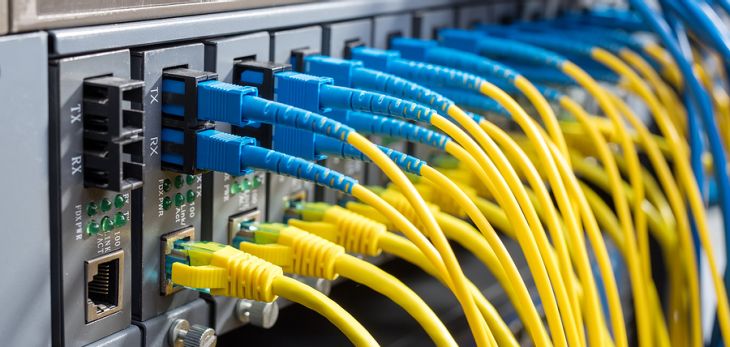
Structured cabling systems for business are the foundation everything else in your network runs on and most businesses don’t think about them until something goes wrong. The global structured cabling market was valued at $12.4 billion in 2024 and is projected to reach $26.3 billion by 2033, driven by businesses that are recognizing reliable network infrastructure isn’t optional, it’s a core operational requirement. (Grand View Research, Structured Cabling Market Report)
If your business is dealing with slow network speeds, frequent connectivity issues, or a tangle of disorganized cables that nobody fully understands, this guide is for you.
What Are Structured Cabling Systems?
A structured cabling system is an organized, standardized approach to installing the physical cabling and hardware that supports your entire network infrastructure. Rather than running individual cables for each device or application, structured cabling creates a single unified system that supports voice, data, video, and security communications across your entire building or campus.
Think of it as the plumbing of your building’s technology. When it’s designed and installed correctly, everything connected to your network; computers, phones, security cameras, access control systems, POS terminals, and more works reliably and efficiently. When it’s poorly done, problems compound over time and become increasingly expensive to fix.
4 Key Benefits of Structured Cabling Systems for Business
1. Scalability That Grows With Your Business
One of the most valuable aspects of a well designed structured cabling system for business is that it’s built to grow with you. Adding new workstations, expanding to a new floor, or integrating new technology doesn’t require ripping out existing infrastructure, it just requires connecting to the system that’s already in place.
LAN installations dominate the structured cabling market, accounting for 80.8% of revenue in 2024, largely because businesses across every sector rely on internal network connectivity as the backbone of their daily operations. A scalable cabling infrastructure means your network investment today supports your business for years to come without constant, costly overhauls.
2. Simplified Network Management and Faster Troubleshooting
Disorganized cabling is one of the most common and most avoidable sources of network downtime. When cables are unlabeled, poorly routed, or tangled, identifying a fault can take hours. With a structured cabling system, every cable is labeled, every pathway is documented, and every connection point is organized through patch panels and distribution frames that make management straightforward.
Structured cabling systems for business dramatically reduce the time it takes to isolate and resolve network issues, which directly translates to less downtime and more productive hours for your team. For businesses that rely on CCTV surveillance or access control systems, organized cabling also means security systems stay online and are easier to maintain and expand.
3. Improved Reliability and Reduced Downtime
Network downtime costs businesses money in lost productivity, missed transactions, and frustrated customers. Structured cabling systems reduce the risk of disruptions through redundant cabling paths, proper cable management that minimizes signal interference, and installation practices that follow industry standards for performance and durability.
The rise of cloud computing, IoT, and 5G infrastructure is fueling demand for structured cabling solutions that support high speed, reliable data transmission and businesses that invest in properly installed infrastructure are far better positioned to adopt these technologies without requiring a full network rebuild.
4. Higher Network Performance and Speed
Your network is only as fast as the cabling it runs on. Outdated or incorrectly installed cabling creates bottlenecks that slow down every device on your network, even if your internet connection and hardware are top of the line. Modern structured cabling systems for business are designed to support the bandwidth demands of today’s data heavy applications including video conferencing, cloud platforms, VoIP, and high definition surveillance.
Cable categories like Cat6 and Cat6A support speeds up to 10 Gbps, while fiber optic cabling supports even higher speeds over longer distances. Fiber optic cabling is gaining rapid adoption as businesses future-proof their networks, driven by its scalability and low latency advantages, making it the preferred choice for businesses planning for long term growth.
Key Components of a Structured Cabling System
Understanding what goes into a structured cabling system helps you ask the right questions when evaluating providers. A complete installation typically includes:
Cables and connectors: The physical media that carries data across your network. Common options include Cat5e, Cat6, Cat6A for copper installations, and single mode or multi mode fiber optic cable for higher-speed or longer distance runs.
Patch panels and distribution frames: Central connection points that organize and route network cables throughout your building. Patch panels allow network administrators to reconfigure connections quickly without disturbing the permanent cabling infrastructure.
Outlets and termination points: The wall jacks and connection points where devices plug into the network. Placement and termination quality directly affect network performance. A poorly terminated connection introduces signal loss that degrades performance across the entire run.
Equipment racks and cabinets: Secure, organized housing for your network switches, servers, patch panels, and other active equipment. Proper rack installation ensures adequate ventilation, accessibility for maintenance, and physical security for your most critical hardware.
Industry Standards That Matter
Quality structured cabling installations follow standards set by recognized industry bodies. The Telecommunications Industry Association (TIA) and International Organization for Standardization (ISO) publish the guidelines that define how structured cabling systems should be designed, installed, and tested.
Compliance with these standards isn’t just a technicality, it’s what separates a professional installation that performs reliably for 10–15 years from a shortcut installation that causes problems within months. Always ask your cabling contractor which standards their work is certified to and whether they provide post-installation testing documentation.
What a Professional Structured Cabling Installation Looks Like
A well executed structured cabling system for business installation follows a clear process:
1. Site assessment and planning: Before any cable is pulled, a thorough assessment of your building layout, current infrastructure, device locations, and future growth plans should inform the design. This planning phase prevents costly mistakes during installation.
2. Professional installation and termination: Every cable run, termination, and connection point should be installed by certified technicians following manufacturer specifications and industry standards. Shortcuts at this stage create performance problems that are difficult and expensive to diagnose later.
3. Testing and certification: Every cable run should be tested after installation using certified test equipment. Results should be documented and provided to you. This certification confirms the system performs to spec and gives you a baseline for future troubleshooting.
4. Ongoing support and maintenance: A structured cabling system is a long term infrastructure investment. Your installation provider should offer ongoing support for adds, moves, changes, and any issues that arise over time. Net Scaling Solutions pairs every structured cabling installation with ongoing support so your network infrastructure stays in peak condition as your business evolves.
The Bottom Line
A properly designed and installed structured cabling system for business is the single most important investment you can make in your network infrastructure. It supports every technology your business relies on; internet, phones, security cameras, access control, POS systems, and more, and it does so reliably, efficiently, and in a way that scales as you grow.
Net Scaling Solutions designs and installs structured cabling systems for businesses across Maryland and the Mid-Atlantic. We handle everything from initial site assessment and system design through professional installation, testing, certification, and ongoing support.
Frequently Asked Questions
A structured cabling system is an organized, standardized network of cables and hardware that supports all of your business communications; data, voice, video, and security. Rather than a tangled collection of individual cable runs, it creates a single unified infrastructure that’s easier to manage, faster to troubleshoot, and built to scale. Every modern business that relies on technology needs one.
Timeline depends on the size and complexity of your space. A single floor small business installation can typically be completed in one to three days. Larger multi floor or multi building projects may take one to several weeks. A proper site assessment before the project begins gives you an accurate timeline based on your specific requirements.
Cat6 copper cabling supports speeds up to 10 Gbps over distances up to 55 meters and is the standard choice for most office environments. Fiber optic cabling supports much higher speeds over longer distances with less signal degradation. It’s the right choice for backbone connections between floors or buildings, data centers, or environments that demand maximum performance. Many businesses use both: fiber for backbone runs and Cat6 for workstation connections.
Signs that your cabling infrastructure needs attention include frequent network slowdowns, unexplained connectivity drops, visible cable damage, cabling that predates Cat5e standards, or a network that was never properly designed and documented. A professional site assessment will identify exactly what you have, what’s performing below standard, and what a proper upgrade would involve.