5 Proven Ways Retail Security Access Control Systems Work
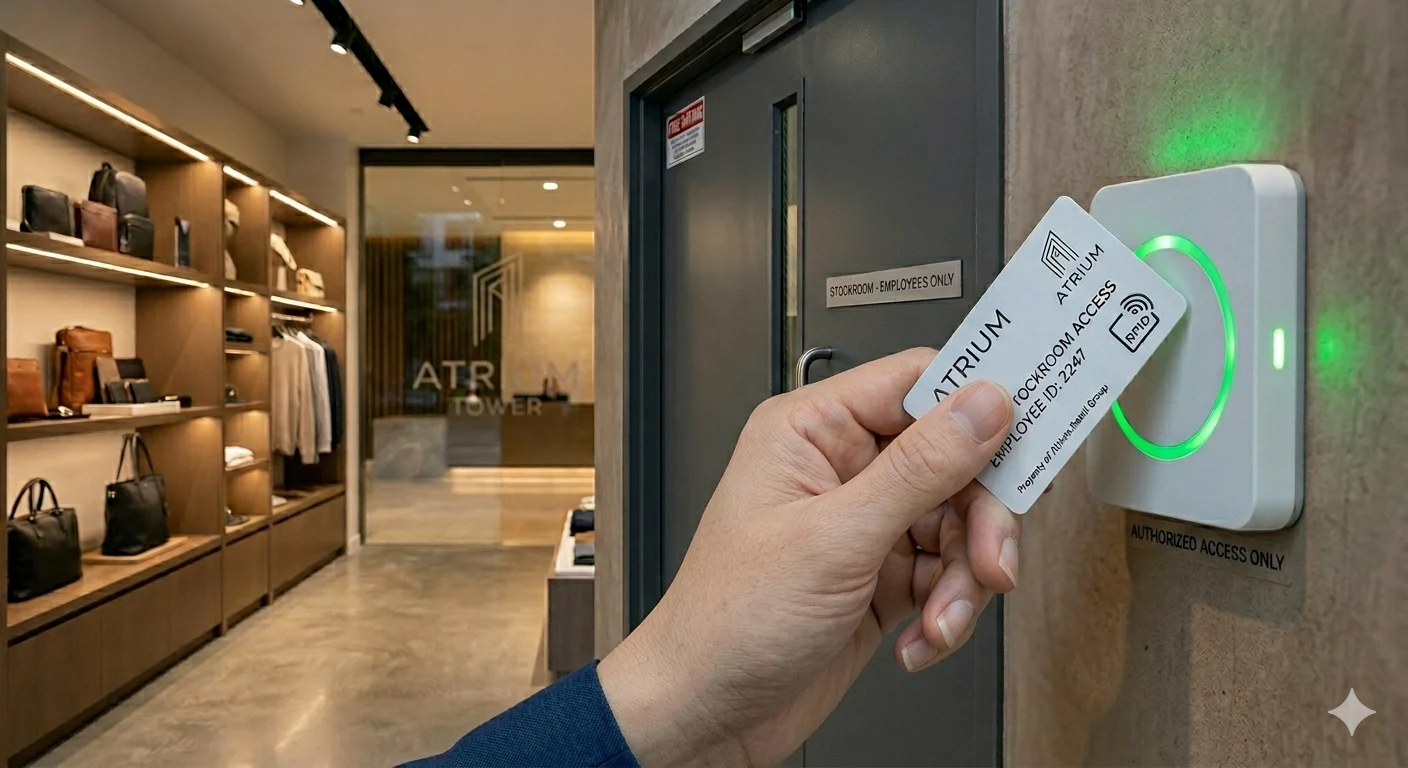
Retail security access control systems have gone from a luxury to a necessity, and the numbers explain why. U.S. retailers lost an estimated $45 billion to shoplifting in 2024 alone, and the problem is growing more sophisticated and more violent year after year. Retailers reported an 18% increase in average shoplifting incidents in 2024 versus 2023, and threats or acts of violence during theft events increased 17% over the same period FBI, according to the National Retail Federation’s Impact of Retail Theft and Violence report. (NRF, The Impact of Retail Theft and Violence 2025)
If you’re a retail store owner relying on basic locks and cameras alone, here are five proven ways access control systems strengthen your security and why they’re worth the investment.
Why Retail Stores Need More Than Basic Security
Retail environments face a unique combination of security challenges. High customer foot traffic, multiple entry and exit points, back-of-house storage areas, employee access management, and the constant movement of valuable merchandise all create vulnerabilities that traditional lock and key systems simply cannot address.
Retail theft, including both internal and external sources, continues to dominate shrinkage statistics, with external theft accounting for 36% of annual shrinkage, the single largest component. That means a significant portion of your losses aren’t coming through the front door as shoplifting, they’re coming through back doors, stockrooms, and areas that only employees should be able to reach.
Retail security access control systems address both sides of that problem, controlling who can enter restricted areas and creating a documented record of every access event.
5 Proven Ways Access Control Systems Protect Your Retail Store
1. Restrict Access to High Value and Restricted Areas
The most immediate benefit of an access control system in a retail environment is the ability to limit who can enter your stockroom, cash office, server room, or any other area containing high value merchandise or sensitive information.
Unlike a physical key that can be copied or passed between employees, electronic credentials, keycards, PIN codes, or biometric readers are tied to an individual. When an employee leaves your business, their access is deactivated instantly. No lock changes, no key collection, no security gap.
For retail stores with separate storage areas, receiving docks, or manager offices, access control creates a clear perimeter that dramatically reduces the opportunity for internal theft, one of the most underreported and costly problems in retail. A professionally installed access control system gives you that control from day one, with the ability to expand coverage as your store grows.
2. Deter Theft Before It Happens
Visible security measures change behavior. When employees and visitors can clearly see keycard readers, biometric scanners, or access control panels at entry points, it communicates that your store takes security seriously and that unauthorized access will be detected and documented.
Retailers are becoming increasingly reliant on technology for security measures, with surveillance systems, secure storage solutions, and stringent inventory controls cited as the most effective tools for mitigating retail losses. Access control is a key part of that technology stack, not just because it prevents unauthorized access, but because its presence alone discourages attempts.
This deterrence effect works on both external threats and internal ones. When employees know that every access event is logged with a timestamp and their credential, the temptation for opportunistic internal theft decreases significantly.
3. Implement Time Based Access Restrictions
One of the most practical features of modern retail security access control systems is the ability to set time based permissions. This means an employee’s keycard works during their scheduled shift and automatically stops working outside those hours.
This has several immediate benefits for retail operations. Employees cannot enter the store before or after their shift without authorization. Contractors and vendors can be granted temporary access for specific time windows, enough time to complete their work, and no longer. Cleaning crews, maintenance workers, and delivery personnel can all be managed with time limited credentials that expire automatically.
This level of control eliminates a major vulnerability in retail security: the window between closing time and opening time, when unauthorized access is hardest to detect and easiest to exploit.
4. Integrate With CCTV Surveillance for Complete Coverage
Retail security access control systems become significantly more powerful when integrated with CCTV surveillance. When these two systems communicate, every access event is automatically correlated with the corresponding camera footage, giving you a synchronized record of who entered, which door, at what time, and what happened next.
This integration serves two critical purposes. First, it speeds up investigations dramatically. Instead of manually reviewing hours of footage, your team can pull up the exact camera feed from the moment an access event occurred. Second, it strengthens the evidentiary value of both systems, access logs confirm identity, video confirms what took place.
For loss prevention teams and insurance purposes, this combination of electronic access records and synchronized video is far more actionable than either system operating independently.
5. Generate Audit Trails That Support Investigations and Compliance
Every event in an access control system is logged automatically; credential used, door accessed, time and date. Over time, this creates a detailed audit trail that is invaluable for loss prevention investigations, HR matters, and compliance documentation.
The majority of retailers; 64%, say they reported less than half of their store related theft incidents to law enforcement, with lack of law enforcement response cited as the primary reason. When incidents do occur and you need to take action, whether internally, with law enforcement, or through insurance, having precise, timestamped access records dramatically strengthens your position.
For retail businesses in regulated industries or those that handle sensitive customer payment data, access logs also serve as compliance documentation, demonstrating that only authorized personnel had access to restricted systems and areas. Pairing your access control infrastructure with proper structured cabling ensures your system stays connected and reliable, so those logs are always accurate and complete.
Choosing the Right Access Control System for Your Retail Store
Not all access control systems are designed with retail environments in mind. Here’s what to prioritize when evaluating options:
Credential flexibility : Retail environments often have high employee turnover and a mix of full time, part time, and contract workers. Choose a system that makes it easy to issue, modify, and deactivate credentials quickly without technical complexity.
Integration capability : Your access control system should integrate cleanly with your existing CCTV cameras and alarm systems. A unified security platform is far more effective and easier to manage than three separate systems that don’t communicate.
Scalability : Whether you’re protecting a single storefront or planning to expand to multiple locations, your access control system should scale without requiring a complete replacement.
Cloud based management : Cloud platforms allow you to manage permissions, review access logs, and receive alerts remotely from any device. For multi location retailers or owners who aren’t always onsite, this visibility is essential.
Professional installation and support : A system that’s incorrectly installed or poorly configured creates false confidence. Work with a certified installer who provides testing documentation and ongoing support.
Frequently Asked Questions
Access control systems reduce retail theft by restricting who can enter stockrooms, cash offices, and other high value areas, eliminating the opportunity for unauthorized access. Time based permissions prevent entry outside of scheduled hours. Every access event is logged, creating accountability that deters internal theft. When integrated with CCTV, the combined system provides synchronized evidence for investigations.
Keycard and key fob systems are the most common choice for retail due to their ease of use and low cost per credential. Biometric systems, fingerprint or facial recognition, are ideal for high security areas like cash offices or server rooms where shared credentials are a concern. Mobile access via smartphone is growing in popularity for its convenience and the ability to issue credentials remotely.
Yes, most access control systems can be retrofitted into existing retail spaces with minimal disruption to daily operations. A professional installer will assess your current infrastructure, identify the most efficient installation approach, and schedule work to minimize impact on your business hours. The result is a fully functional system without a major renovation.
When access control and CCTV are integrated, every access event automatically pulls up the corresponding camera footage from that door at that time. This means loss prevention teams can quickly identify exactly what happened at any entry point without manually searching through hours of video. It also creates a synchronized evidentiary record that is far more credible for insurance claims, internal investigations, and law enforcement reports.
The Bottom Line
Retail security access control systems don’t just protect your merchandise, they protect your staff, your data, your operational continuity, and your profitability. In an environment where theft is becoming more frequent and more aggressive, the businesses that invest in layered, integrated security are the ones best positioned to prevent losses rather than simply count them.
Net Scaling Solutions installs and configures retail security access control systems for businesses across Maryland and the Mid-Atlantic. We combine access control with CCTV surveillance, alarm systems, and structured cabling infrastructure to give your store complete, integrated protection from a single trusted provider.