5 Essential Alarm Systems for Commercial Properties That Work
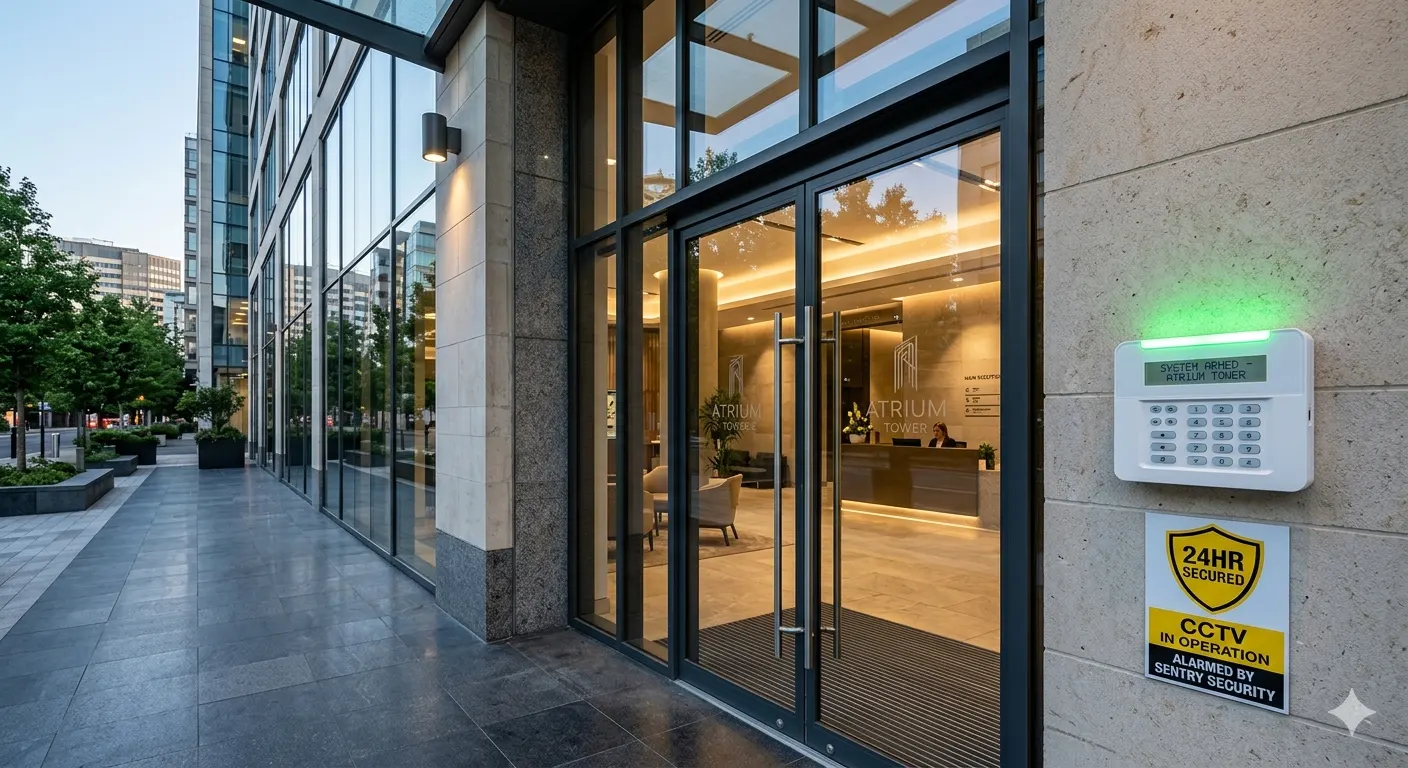
Choosing the right alarm systems for commercial properties is one of the most important security decisions a business owner makes and getting it wrong is expensive. The global commercial security system market was valued at $202.23 billion in 2024 and is projected to reach $540.47 billion by 2033, growing at a compound annual rate of 11.8%, driven by businesses that are taking security seriously before an incident forces their hand. (Grand View Research, Commercial Security System Market Report)
If you’re evaluating your options, here are the 5 types of alarm systems every commercial property should understand, and how they work together to create a complete security strategy.
Why Commercial Properties Need More Than a Basic Alarm
A commercial property faces security risks that residential systems simply aren’t designed to handle. Higher foot traffic, multiple access points, valuable inventory or equipment, employee safety considerations, and regulatory compliance requirements all demand a more comprehensive approach.
Commercial buildings held the highest market share of all security end-use segments in 2024, as offices, retail spaces, and hospitality businesses implement integrated solutions combining video surveillance, access control, and fire protection to mitigate theft, unauthorized access, and workplace violence. The businesses investing in layered, integrated alarm systems are the ones best positioned to prevent incidents, not just respond to them.
The 5 Essential Types of Alarm Systems for Commercial Properties
1. Burglar Alarm Systems
Burglar alarm systems are the foundation of commercial property security. They use a network of door and window sensors, motion detectors, and a central control panel to detect unauthorized entry triggering audible alerts and notifying a monitoring center or local authorities when a breach is detected.
Modern burglar alarm systems go beyond basic detection. The commercial and industrial segment is expected to exhibit the highest growth rate in the burglar alarm market through 2030, as business locations in high traffic areas face elevated risk and require more sophisticated, multi layered security than residential systems. ECAM
For commercial properties, burglar alarms are typically paired with CCTV surveillance to provide both detection and documented evidence, giving you proof of what happened, not just an alert that something did.
2. Fire Detection and Alarm Systems
Fire detection is a legal requirement for most commercial properties and for good reason. A fire alarm system that detects smoke, heat, or carbon monoxide early enough gives occupants time to evacuate and gives emergency responders time to minimize damage.
Modern commercial fire alarm systems go beyond basic smoke detectors. They integrate with sprinkler systems, emergency lighting, and building management systems to trigger a coordinated response the moment a threat is detected. They also support zoned detection, meaning the system can identify exactly where in a building the threat originates, critical for large or multi floor commercial spaces.
Regular testing and certification of fire alarm systems is not optional, it’s a compliance requirement. Make sure your system is installed and maintained by a certified provider who documents every test and inspection.
3. Alarm Systems with Access Control Integration
Alarm systems for commercial properties become significantly more powerful when integrated with access control. Rather than simply alerting you when someone breaks in, an integrated system actively prevents unauthorized access in the first place and creates a detailed record of who accessed what, when.
Access control integration allows your alarm system to trigger automatically when an unauthorized access attempt is detected, locking down entry points, alerting security personnel, and logging the event with a timestamp. Keycard systems, biometric readers, and keypad entry can all be tied directly into your alarm infrastructure.
A professionally installed access control system integrated with your alarm platform gives you centralized control over your entire building’s entry points from a single interface, making it far easier to manage security across multiple doors, floors, or locations.
4. Alarm Systems with Video Surveillance Integration
Video surveillance integration transforms your alarm system from a reactive tool into a proactive one. When a sensor is triggered, an integrated system can automatically pull up the relevant camera feed, begin recording, and push a live view to your security personnel or monitoring center, all in real time.
Advanced surveillance, access control, and alarm systems accounted for over 77% of the global security systems market in 2024, driven by AI driven video analytics, biometric authentication, and IoT-enabled devices that have enhanced the effectiveness of integrated security solutions.
For commercial properties, the combination of alarms and cameras serves two critical purposes: deterrence before an incident and documentation after one. Video evidence tied to specific alarm events makes investigations faster, supports insurance claims, and strengthens any legal action that follows.
5. Environmental Monitoring Alarm Systems
Environmental alarms are the most overlooked category in commercial security, and often the most costly when ignored. These systems monitor conditions like temperature, humidity, water leaks, and air quality, triggering alerts when readings fall outside safe parameters.
For businesses with server rooms, cold storage, medical equipment, or sensitive inventory, an environmental alarm system can mean the difference between a minor maintenance issue and a catastrophic loss. A water leak detected at 2 a.m. by an automated alert costs far less to address than one discovered the following morning after hours of undetected damage.
Environmental monitoring systems integrate directly with your broader alarm infrastructure, so all alerts, whether from a motion sensor, a fire detector, or a flood sensor, flow through the same control panel and monitoring platform.
How These Systems Work Better Together
The most effective commercial security strategy doesn’t rely on any single alarm type, it integrates all of them into a unified system with centralized monitoring and management. When your burglar alarm, fire detection, access control, video surveillance, and environmental monitoring all communicate with each other, you get:
- Faster response times because alerts are correlated and verified automatically
- Fewer false alarms because multiple sensors must confirm an event
- Clearer evidence because video, access logs, and alarm data are synchronized
- Simpler management because everything is controlled from one platform
A structured cabling foundation that’s properly designed and installed ensures all of these systems stay connected and communicate reliably, especially critical in larger commercial properties where network stability directly affects security performance.
What to Look for in a Commercial Alarm System Provider
Licensed and certified installation : Commercial alarm systems must meet local codes and insurance requirements. Always work with a licensed installer who provides documentation.
Monitoring options : Decide between self-monitoring via app, professional 24/7 monitoring through a central station, or both. For most commercial properties, professional monitoring is worth the cost.
Scalability : Your system should grow with your business. Choose equipment and a provider that can expand to cover additional areas, floors, or locations without requiring a full replacement.
Integration capability : The more your systems communicate with each other, the more effective they are. Prioritize providers who can integrate alarms, cameras, access control, and environmental monitoring into one cohesive platform.
Ongoing support and maintenance : A commercial alarm system requires regular testing, software updates, and occasional hardware maintenance. Make sure your provider offers a clear support and maintenance agreement.
Frequently Asked Questions
The best commercial alarm system is one that’s integrated, combining intrusion detection, fire alarms, access control, video surveillance, and environmental monitoring into a single unified platform. The right combination depends on your property size, industry, number of access points, and the type of assets you’re protecting. A professional site assessment is the best starting point.
Fire detection and alarm systems are legally required in most commercial properties under local fire codes and building regulations. Burglar and intrusion alarm systems may also be required by your commercial insurance provider to qualify for certain coverage levels. Always verify requirements with your local authority and insurance provider.
A monitored system connects to a 24/7 professional monitoring center that verifies alarms and dispatches emergency services when needed, even if no one at your business is available to respond. An unmonitored system triggers local audible alerts only, relying on someone nearby to notice and respond. For commercial properties, professional monitoring is strongly recommended.
Most commercial alarm systems should be tested at least annually, with fire alarm systems typically requiring more frequent testing per local fire codes, often quarterly or semi-annually. Environmental and access control systems should also be tested regularly. Your installation provider should supply a maintenance schedule and documentation for every test performed.
The Bottom Line
The right alarm systems for commercial properties aren’t just about responding to incidents, they’re about preventing them. A well designed, professionally installed, and properly integrated alarm system protects your people, your assets, and your business continuity every single day.
Net Scaling Solutions designs and installs commercial alarm systems for businesses across Maryland and the Mid-Atlantic. We handle everything from system design and installation through integration with cameras, access control, and monitoring, so your entire security infrastructure works as one.