Access Control Systems for Businesses: 6 Powerful Benefits
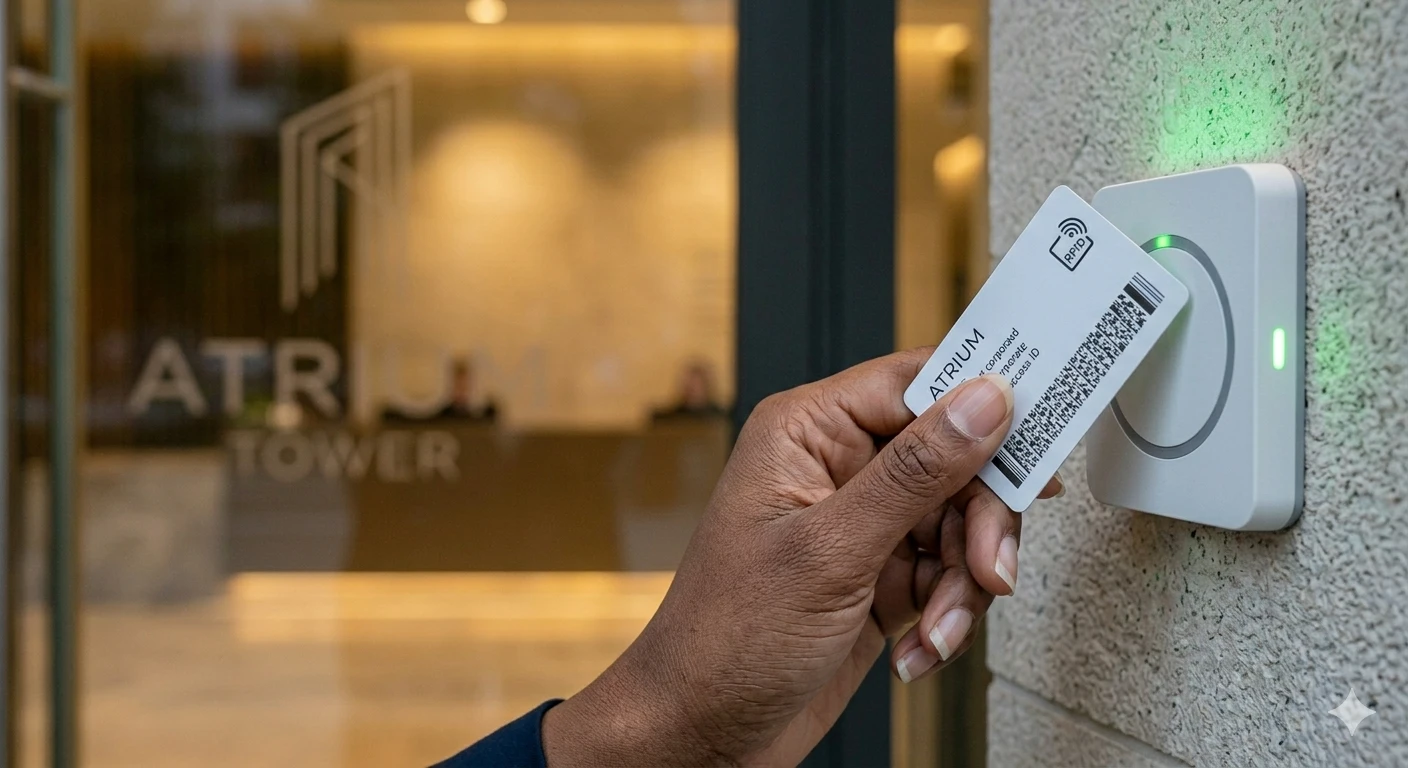
Access control systems for businesses are no longer a luxury reserved for large corporations, they are a fundamental part of any serious security strategy. The global access control market was valued at $10.4 billion in 2024 and is projected to reach $15.2 billion by 2029, growing at a compound annual rate of 7.8%, driven by businesses of every size recognizing that controlling who enters their facilities is just as important as what happens inside them. (MarketsandMarkets, Access Control Market Report 2024)
If you’re still relying on traditional lock and key systems to secure your business, here’s what you’re missing and why it matters.
What Are Access Control Systems?
Access control systems are security mechanisms that regulate who can enter specific areas of your business premises and when. Instead of physical keys that can be lost, copied, or stolen, access control systems use electronic credentials such as keycards, PIN codes, biometric data, or mobile devices to authenticate entry.
Modern access control systems for businesses go far beyond a single door. They manage multiple entry points across an entire facility, generate detailed logs of every access event, and integrate with cameras, alarms, and building management platforms to create a unified security environment.
6 Powerful Benefits of Access Control Systems for Businesses
1. Enhanced Security and Theft Prevention
The most immediate benefit of an access control system is the ability to restrict entry to authorized personnel only. Unlike traditional keys, electronic credentials can be deactivated instantly, the moment an employee leaves your company or a card is lost, their access is gone. No locks to change, no keys to collect.
North America holds the largest share of the global access control market, driven by rising demand for cloud based services, mobile access control solutions, and advanced management software, with strong uptake particularly in the commercial sector. Businesses across retail, healthcare, finance, and professional services are all investing in access control because the alternative, relying on physical keys, creates security vulnerabilities that are simply too costly to ignore.
2. Improved Operational Efficiency
Traditional lock and key systems create friction, employees get locked out, keys get lost, and security managers spend time on issues that access control eliminates entirely. With an electronic system, employees move freely through the areas they’re authorized to access without needing to find a key or wait for someone to let them in.
Access permissions can be set by role, by time of day, or by specific door, meaning a warehouse employee has access to the loading dock but not the server room, and a contractor’s credentials automatically expire at the end of their project. That level of control runs automatically in the background without requiring management intervention.
3. Detailed Audit Trails and Accountability
Every access event in an electronic system is logged, who entered, which door, at what time. This creates an automatic audit trail that is invaluable for investigations, compliance reporting, and general accountability.
If an incident occurs; theft, an unauthorized access attempt, a workplace safety issue, you have a precise, timestamped record of who was where and when. This documentation supports internal investigations, insurance claims, and if necessary, legal proceedings. For businesses in regulated industries like healthcare or finance, access logs are often a compliance requirement, not just a security best practice.
Pairing your access control system for businesses with CCTV surveillance takes this a step further, video footage synchronized with access logs gives you both a record and visual confirmation of every entry event.
4. Scalability That Grows With Your Business
One of the most practical advantages of modern access control systems is how easily they scale. Adding a new door, a new floor, a new location, or a new employee doesn’t require a locksmith or a new set of keys, it requires a few configuration changes in your access management software.
The rising adoption of IoT-enabled security systems and cloud-based platforms is driving access control market growth, with cloud integration offering scalability, remote monitoring, and reduced maintenance costs that support advanced models like Access Control as a Service (ACaaS).
Cloud based access control platforms in particular make multi site management straightforward, you can manage permissions, review access logs, and respond to alerts across all your locations from a single interface, anywhere you have internet access.
5. Integration With Your Broader Security Infrastructure
Access control systems become significantly more powerful when integrated with other security systems. When an unauthorized access attempt triggers an alarm, your system can simultaneously lock down adjacent doors, send an alert to your security team, and pull up the relevant camera feed, all automatically.
A professionally installed alarm system integrated with access control creates a layered security environment where each system reinforces the others. This integration reduces response times, eliminates manual handoffs between systems, and gives your security team a complete, real time picture of what’s happening across your entire facility.
6. Flexible Credential Options for Every Environment
6. Flexible Credential Options for Every Environment
Modern access control systems for businesses : support a wide range of credential types, allowing you to choose what works best for your environment and workforce:
Keycard and key fob systems : are the most common choice for offices and commercial buildings; easy to issue, easy to deactivate, and familiar to most employees.
Biometric systems : using fingerprint or facial recognition eliminate the risk of lost or shared credentials entirely, access is tied to the individual, not a card they might hand to someone else.
Mobile access : allows employees to use their smartphones as credentials via Bluetooth or NFC, increasingly popular in environments where employees prefer not to carry physical cards.
PIN keypad systems : work well in lower traffic environments or as a secondary factor in multi factor authentication setups.
The right credential type depends on your security requirements, your employee population, and the specific areas you’re protecting. A professional assessment will identify the best fit for each entry point in your facility.
How to Implement Access Control Systems the Right Way
Getting access control right requires more than purchasing hardware. Here’s what a professional implementation looks like:
Security needs assessment : Before any hardware is specified, a thorough assessment of your premises should identify which areas require restricted access, the appropriate level of security for each, and how many users and credential types the system needs to support.
System design and planning : The layout of your access points, the type of credentials, the integration requirements with cameras and alarms, and the management platform all need to be designed as a cohesive system, not assembled piecemeal.
Professional installation and integration : Proper installation by certified technicians ensures every reader, controller, and credential is configured correctly and communicates reliably. The network infrastructure supporting your access control system, particularly the structured cabling, must be installed to specification to guarantee system reliability.
User training and access management : Your team needs to understand how to use the system, manage credentials, respond to alerts, and follow your access control policies. Clear procedures for granting and revoking access are essential from day one.
Ongoing maintenance and support : Access control systems require regular software updates, hardware inspections, and policy reviews to stay effective as your business evolves.
Frequently Asked Questions
The most common types are keycard and key fob systems, biometric systems using fingerprint or facial recognition, PIN keypad systems, and mobile access systems that use smartphones as credentials. Many businesses use a combination, for example, keycard access for most doors and biometric access for high-security areas like server rooms or executive offices.
Costs vary significantly based on the number of doors, the credential type, whether the system is cloud-based or on premise, and the level of integration with cameras and alarms. A basic single door system can start around $1,500–$3,000 installed, while a comprehensive multi door, multi site system can run into tens of thousands. A professional assessment is the best way to get an accurate estimate for your specific requirements.
Yes, and integration is strongly recommended. When access control, cameras, and alarms share a unified platform, an access event automatically triggers relevant camera feeds and can initiate alarm responses. This eliminates manual handoffs between systems and gives security personnel a complete, real time picture of what’s happening at every entry point.
The right system depends on your building size, the number of entry points, your industry’s compliance requirements, your employee population, and your existing security infrastructure. A professional site assessment from a certified installer will evaluate all of these factors and recommend a solution that fits your specific needs and budget, without over engineering or leaving security gaps.
The Bottom Line
Access control systems for businesses protect your people, your assets, and your sensitive areas, while giving you visibility and control that traditional lock and key systems simply cannot provide. The investment pays for itself through reduced theft risk, eliminated key management overhead, regulatory compliance, and the peace of mind that comes from knowing exactly who has access to every part of your business.
Net Scaling Solutions designs and installs access control systems for businesses across Maryland and the Mid-Atlantic. We handle everything from site assessment and system design through installation, integration with cameras and alarms, and ongoing support.